How to Get a Jawline: 12 Best Ways for Men and Women
Adrian Cole
10/04/2025
3:47 am
Table Of Contents
You already know the look. A cleaner angle under the chin. A sharper line from the ear to the jaw. That little bit of definition that makes the face look more balanced in photos and in the mirror.
But not everyone naturally has a strong jawline, and that does not mean anything is “wrong” with your face. Genetics, weight changes, aging, skin laxity, posture, and even how your chin sits can all soften the lower face over time.
The good news is that there are real ways to improve jawline definition for both men and women. Some are simple habits, like posture work, skincare, and strength training. Others involve non-surgical treatments that can define, slim, tighten, or contour the lower face without surgery.
A lot of jawline guides stop at exercises. This one goes further.
We’ll walk through 12 practical ways to get a more defined jawline, how each one works, who it may be best for, and what kind of result you can realistically expect.
What Actually Defines a Jawline?
A defined jawline usually comes down to four things: bone structure, body fat, skin firmness, and muscle tone. Some of that is genetic, of course. You cannot change the bone structure you were born with through habits alone. But that does not mean your jawline is completely out of your control.
Body fat can soften the line under the chin. Loose skin can blur the edge between the face and neck. Weak posture can make the lower face look less defined. And in some people, the jaw muscles or chin shape can affect how sharp the jawline appears.
That is why most people get the best results from a combination of approaches. The right plan depends on what is actually softening your jawline in the first place.
5 Natural Ways to Build a Sharper Jawline
These methods will not replace clinical treatments for everyone, but they are a good place to start. Think of them as your foundation. If your jawline looks softer because of extra fat, posture, or loose skin, these habits can help reveal more definition before you consider anything in-office.
1. Lose Face Fat to Reveal Your Natural Bone Structure
Extra fat under the chin and along the neck can blur the jaw angle for both men and women. You cannot choose exactly where your body loses fat first, but lowering your overall body fat through a calorie deficit, regular cardio, and strength training often shows up in the face.
Even losing 5 to 10 pounds can make the jawline look cleaner for some people. It will not change your bone structure, but it can help reveal what is already there.
If stubborn fat under the chin stays even after weight loss, treatments like Kybella may help dissolve it without surgery. We’ll cover that in the treatment section below.
2. Jawline Exercises: The Moves That Actually Work
Jawline exercises are not magic, but they can help strengthen the muscles that support the jaw and neck. The results are usually subtle, so consistency matters.
Here are a few simple moves worth trying:
Neck curl-up: Lie flat, press your tongue to the roof of your mouth, then lift your chin toward your chest. Hold for 2 to 3 seconds. Do 3 sets of 10. This targets the front neck muscles that help frame the jawline.
Collarbone backup: Sit upright and pull your head straight back while keeping your chin level with the floor. Hold for 3 seconds. Repeat 10 times. This helps correct forward-head posture, which can make the jawline look softer.
Vowel sounds: Open your mouth wide and exaggerate each vowel sound: A, E, I, O, U. Do 3 sets of 15. This works the jaw and muscles around the mouth.
Chin-up stretch: Tilt your head back, look toward the ceiling, and gently push your lower jaw forward. You should feel a stretch under the chin. Hold for 10 seconds. Repeat 10 times.
One quick note: you probably do not need fancy jaw exercise gadgets. A 2024 report found that products like Jawzrsize offer little to no measurable improvement in jaw appearance. Save your money. The bodyweight moves above are free, simple, and more practical.
3. Fix Your Posture Before Anything Else
Before you buy a tool or book a treatment, check your posture. It can change how your jawline looks almost instantly.
“Tech neck” happens when your head tilts forward from looking down at your phone, laptop, or desk all day. When your head sits too far forward, the neck area can look softer and the jawline loses that cleaner angle.
A simple fix: keep your ears stacked over your shoulders when sitting, standing, or taking photos. It will not change your bone structure, but it can make your jaw look sharper right away.
4. Upgrade Your Skincare Routine to Tighten the Skin
Even with strong bone structure, loose or thin skin can make the jawline look less defined. This is especially common with aging, sun exposure, or weight changes.
Look for skincare products with retinoids, peptides, and vitamin C to support collagen and firmness. Then add broad-spectrum SPF 30 or higher every single day.
That last part matters. Sun damage breaks down collagen faster than most people realize, and collagen loss is one of the biggest reasons the lower face starts to look softer over time.
5. At-Home Tools: What Actually Works
At-home tools can help, but it is important to be realistic.
Gua sha stones and facial rollers may improve circulation and reduce puffiness for a short time, which can make the jawline look more defined right after use. Microcurrent devices use low-level electrical stimulation, and some people notice a firmer look with consistent use.
These tools will not permanently reshape your jaw or replace clinical treatments. But as part of a routine with good skincare, posture, and healthy habits, they can support a cleaner, less puffy lower-face look.
Does Chewing Gum Help Your Jawline? The Honest Answer
Not really. Chewing gum might make your jaw feel tired, but it does not meaningfully sharpen your jawline.
Research on chewing and masticatory performance shows that gum chewing can improve chewing function for some people, but it does not visibly change the shape of the jaw. The main chewing muscles, called the masseters, sit more in the cheek and jaw angle area. They are not what creates that clean, sharp line along the edge of the face.
In fact, chewing gum too much can sometimes do the opposite of what you want. Overworking the masseter muscles may make them larger, which can create a wider or bulkier lower face. For someone trying to look more sculpted or slim through the jaw, that may not be the goal.
A better option depends on what you are trying to fix. If your jaw looks wider because of bulky masseter muscles, masseter Botox can help relax the muscle over time. Most patients start noticing slimming around 4 to 6 weeks after treatment, with little to no downtime.
Does Mewing Work for Jawline Definition?
Mewing is the habit of pressing your tongue flat against the roof of your mouth with the idea that it can reshape the jaw and midface over time. It is very popular online, but the clinical evidence is limited.
Here’s the honest answer: there is no strong peer-reviewed research showing that mewing creates visible jawline changes in adults. Once you are an adult, your facial bone structure is mostly set. Tongue posture alone is unlikely to reshape your jaw in a noticeable way.
That does not mean tongue posture is useless. Proper tongue placement can support better oral posture, and better posture can help the jawline look cleaner. But mewing should be seen as a small supportive habit, not a real standalone fix.
If you want jawline improvement within a realistic timeframe, you will likely get more reliable results from the other methods in this guide, especially posture correction, skincare, fat reduction, filler, Botox, or skin-tightening treatments, depending on what is softening your jawline.
How to Get a Jawline as a Woman
Wanting a more defined jawline is not just a men’s aesthetic goal. A lot of women want the same thing, but usually with a slightly different finish: cleaner contour, softer angles, and better lower-face balance without making the face look too square or heavy.
That difference matters. A male jawline treatment plan often focuses on stronger angles and a more structured lower face. For women, the goal is usually definition without losing softness. That is why placement, dosage, and full facial balance matter so much.
For women specifically:
Dermal filler along the jawline can create a cleaner, more sculpted shape without making the face look masculine. Placement is everything. A skilled nurse injector follows your natural bone structure and enhances what is already there instead of overcorrecting.
Masseter Botox can help women who carry tension in the jaw or want to slim a wider lower face. This is especially helpful when the jaw looks bulky because of overactive chewing muscles.
Full facial balancing often creates a more natural result than treating the jawline alone. Sometimes the chin, cheeks, lips, and jaw all need to be considered together so the final result looks balanced from every angle.
Non-surgical double chin treatments like Kybella may help when fullness under the chin is softening the jawline. This can be a good option for women who want a sharper transition between the face and neck without surgery.
At InjectCo Fort Worth, InjectCo Plano, and across all 9 Texas locations, jawline treatments for women start with a consultation so your provider can map your facial proportions before recommending anything.
7 Non-Surgical and Clinical Treatments for a Defined Jawline
If you have tried the natural route and still are not seeing the jawline definition you want, that does not mean you failed. Sometimes the issue is not effort. It may be genetics, bone structure, stubborn fat, muscle bulk, or skin laxity.
That is where clinical treatments can help. The non-surgical options below are available at InjectCo’s 9 Texas locations and can define, slim, tighten, or contour the jawline without surgical downtime.
6. Jawline Dermal Fillers: Instant Definition Without Surgery
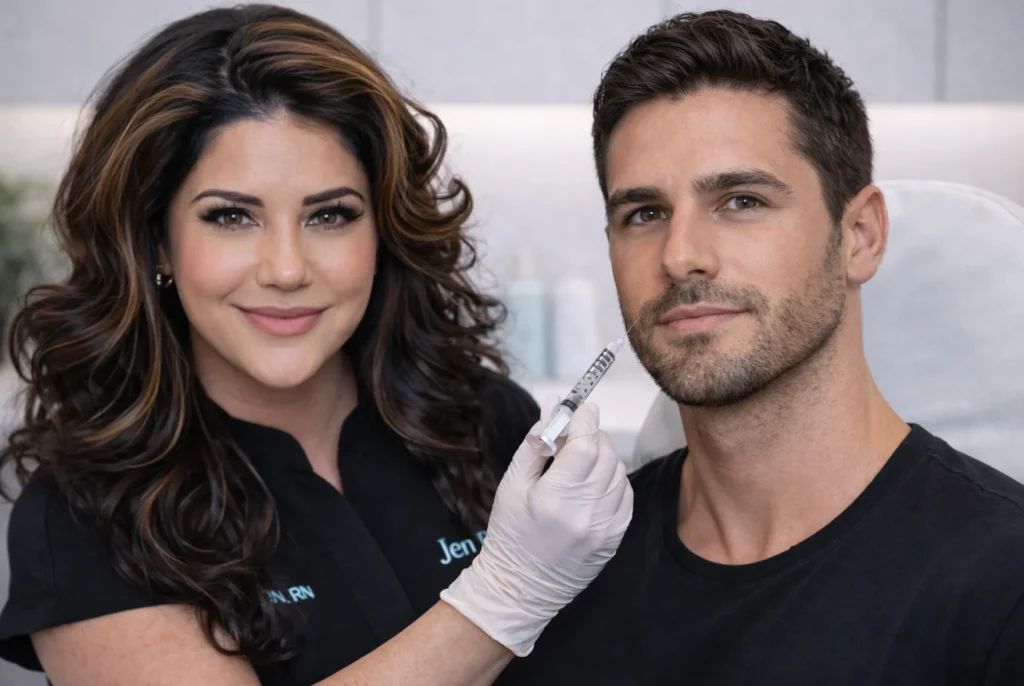
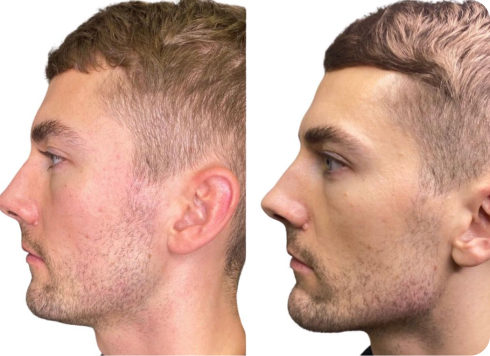
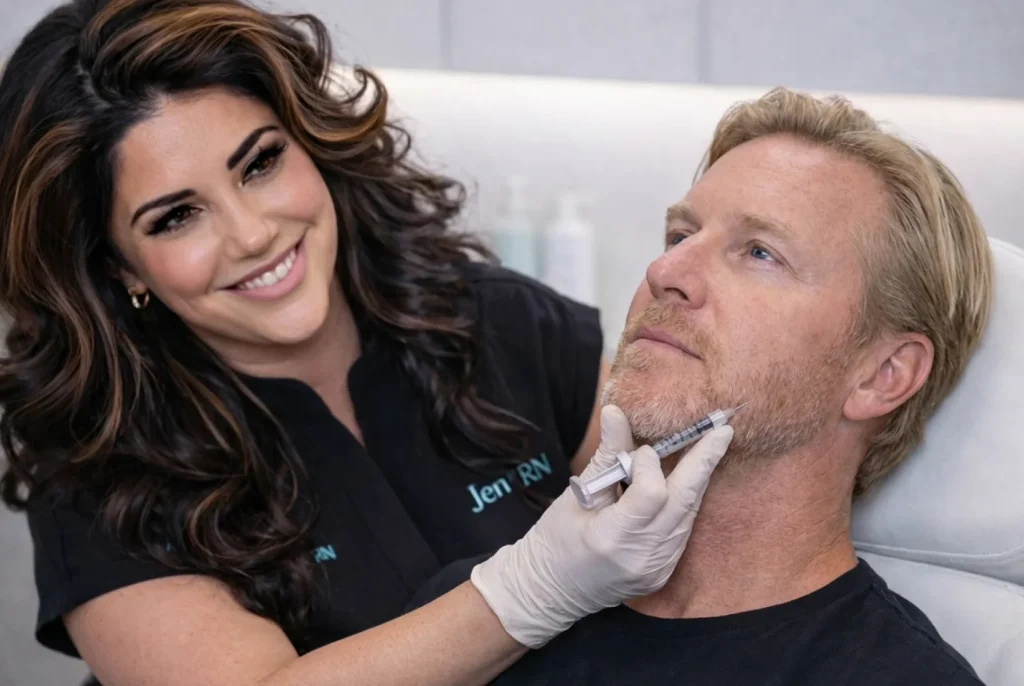
Jawline dermal fillers are used to add structure along the lower jaw. These hyaluronic acid-based gels are placed along the mandible to create cleaner angles, improve symmetry, and build definition where the natural bone structure is softer.
The result is immediate, which is why this is one of the most popular options for people who want a sharper jawline without surgery. Most treatments take under 30 minutes, and swelling is usually mild, often settling within 48 to 72 hours.
Fillers are especially helpful if your jawline looks uneven, your chin is slightly recessed, or your lower face needs more structure. When done well, the result should not look heavy or overfilled. It should simply make your face look more balanced and defined.
At InjectCo, jawline dermal fillers start at $699 per syringe. Most jawline treatments use 1 to 2 syringes, depending on your anatomy and goals. For pricing details, see our full guide on jawline filler cost.
7. Masseter Botox: Slim and Sculpt Your Jaw Angle
Masseter Botox works differently from filler. Instead of adding structure, it relaxes the masseter muscles, which are the large chewing muscles near the back of the jaw.
When these muscles are overactive or enlarged, the lower face can look wider, squarer, or bulkier. Botox gradually softens the muscle activity, and over 4 to 8 weeks, the jawline may look slimmer and more tapered.
This is often the best option for people whose jawline looks wide because of muscle bulk, jaw clenching, teeth grinding, or tension in the lower face. As a bonus, many patients also notice relief from clenching or TMJ-related discomfort.
The change is gradual, which makes it feel very natural. Most people will not think you had a treatment. They may just notice that your face looks softer, slimmer, or more refined.
Results typically last 4 to 6 months before a touch-up is needed.
8. Kybella: Dissolve the Double Chin That is Hiding Your Jawline
Sometimes a soft jawline is not really a jawline problem. It is the fat pad under the chin blurring the line between your face and neck.
Kybella is an FDA-approved injectable treatment that targets fat under the chin. It works by breaking down fat cells over a series of sessions, helping the jawline look sharper once the fullness is reduced.
Most patients need 2 to 4 sessions, spaced about 6 to 8 weeks apart. Swelling after treatment is normal, so timing matters, especially if you have events, photos, or travel coming up.
Once treated, fat cells are destroyed, they do not come back. That said, future weight gain can still affect the area, so results are best maintained with stable weight and healthy habits.
If you are also working on weight loss as part of your jawline plan, read our guide on how to get rid of a double chin without surgery. For pricing and session details, see our full breakdown on how much Kybella costs in Texas.
9. Energy-Based Skin Tightening
Sometimes the jawline looks soft because the skin has started to loosen, not because there is extra fat or weak structure.
Energy-based treatments like radiofrequency, ultrasound treatments, and microneedling work by encouraging new collagen production. The goal is firmer, tighter-looking skin along the lower face and neck.
This is not an instant result. Most patients see changes build gradually over 3 to 6 months as collagen develops. These treatments are best for mild to moderate skin laxity and can pair well with filler, Botox, or Kybella as part of a full lower-face plan.
10. Full Facial Balancing
Sometimes the jawline is not the only thing affecting your lower-face shape.
Your chin, cheeks, midface, nose, and jaw all influence how defined your face looks. If one area is slightly under-supported, the jawline may look softer even when the jaw itself is not the main issue.
Full facial balancing looks at the face as a whole instead of treating one feature in isolation. Your provider may use a combination of filler, Botox, or other injectables to improve proportion and create a more natural result.
This approach often works best for patients who want definition, but still want to look like themselves.
Surgical Options for a More Dramatic Result
11. Liposuction
Liposuction under the chin and along the neck can remove stubborn fat in a single surgical procedure. It is more dramatic than Kybella and may be a better fit for patients with a larger amount of submental fat who want a more direct result.
Once swelling goes down, the jaw and neck angle can look much sharper. The trade-off is recovery. Most patients need about 2 to 3 weeks for bruising, swelling, and compression garment use.
This is usually best for someone who wants a more “one-and-done” approach and is comfortable with surgical downtime.
12. Neck Lift
A neck lift is the most comprehensive option for defining the jawline. It removes excess skin and tightens the platysma muscle, which sits along the neck and lower face.
This can create a cleaner jawline, a smoother neck, and a more defined transition between the face and neck. It is usually best for patients with significant loose skin, especially when non-surgical skin tightening is unlikely to be enough.
Recovery takes longer than non-surgical treatments, often around 4 to 6 weeks. But for the right patient, the results can be long-lasting and much more noticeable.
How to Choose the Right Option for Your Jawline
The best approach depends on what is actually softening your jaw. Here is a quick diagnostic guide:
If Your Issue Is…
Start Here
Then Consider
Excess fat / double chin
Calorie deficit + exercise
Kybella or chin lipo
Soft skin / sagging
Skincare (retinoids + SPF)
RF tightening or neck lift
Weak angles / flat jaw
Jawline dermal fillers
Full facial balancing
Wide / bulky jaw
Masseter Botox
Jawline filler for angle
Asymmetry
Full facial balancing consult
Filler + Botox combination
Genetics / all of the above
Free InjectCo consultation
Combination treatment plan
Not sure which category applies to you? A free virtual consultation with one of InjectCo’s nurse injectors is the fastest way to get a straight answer. No upsell pressure. Just a clinical assessment of what will actually move the needle for your face.
Get a More Defined Jawline at InjectCo
InjectCo is a 100% nurse-led medical aesthetics brand with nine locations across Texas. Our injectors have performed over 10,000 jawline, filler, and Botox treatments and hold 199 verified 5-star reviews across our clinics. Every treatment plan is built by a licensed RN injector under physician supervision — never by a sales associate.
Jawline filler starts at $699 per syringe. Pricing for Masseter Botox and Kybella is confirmed during your consultation, since the right plan depends on what is actually softening your jawline.
Book a free virtual consultation today and bring a photo. We’ll walk you through what we would recommend, why we would recommend it, and what kind of result is realistic for your face.
Frequently Asked Questions
The most effective non-surgical approach combines dermal fillers (for structural definition), masseter Botox (if your jaw is wide or bulky), and Kybella (if a double chin is softening the jaw angle). Lifestyle habits like weight management, jawline exercises, and good skincare support the result but work more slowly. For most people, a nurse injector consultation is the fastest way to identify which combination will work for their specific anatomy.
Jawline dermal fillers produce immediate visible results in under 30 minutes. Masseter Botox takes 4 to 6 weeks to show full effect. Kybella takes 2 to 4 sessions over 3 to 6 months. For the fastest cosmetic change with no downtime, jawline filler is the answer.
Yes, but the results are usually subtle. Jawline exercises like neck curl-ups, chin-up stretches, and collarbone backups can help strengthen the muscles around the jaw and neck, which may make the area look a little more defined over time.
The key is consistency. Doing them once in a while will not change much, but adding them to your routine can support your jawline plan. For most people, though, exercises work best as a foundation, not a replacement for treatments like filler, Botox, Kybella, or skin tightening when more noticeable definition is the goal.
No. Research does not support chewing gum as a method for improving jaw definition. The muscles chewing gum works are primarily in your cheeks and neck, not along the visible jaw edge. Excessive gum chewing can actually enlarge the masseter muscle and make the jaw appear wider and squarer, which is the opposite of the sharp angle most people want.
Mewing (pressing the tongue to the roof of the mouth) has no peer-reviewed clinical evidence supporting visible jaw changes in adults. Adult bone structure is not responsive to tongue posture pressure in the way mewing advocates claim. While proper oral posture has functional benefits, it should not be relied on as a cosmetic jawline treatment.
Women often achieve the best results with jawline dermal filler placed along the mandible for angular definition, Kybella for submental fat reduction, and full facial balancing that considers all lower face proportions together. The goal for most women is clean definition without masculinizing the jaw angle, which requires a nurse injector with specific aesthetic training in female facial anatomy.
A defined jawline has a clear visible separation between the face and neck with a clean angle. A chiseled jawline is more angular and pronounced, often with visible bone structure and sharper contours along the mandible. Most people are aiming for defined. Chiseled typically requires either strong genetics or a combination of clinical treatments including filler and Botox.
Jawline filler at InjectCo starts at $699 per syringe. Most jawline treatments use 1 to 2 syringes. Final cost depends on the degree of correction needed and the number of syringes used. Pricing is confirmed at your free consultation before any treatment begins. No surprise charges.
Yes, particularly if excess fat under the chin or along the neck is obscuring your natural jaw angle. You cannot spot-reduce facial fat, but overall weight loss consistently improves jaw definition for most people. If stubborn fat remains after reaching a healthy weight, Kybella can dissolve it permanently without surgery.
Hyaluronic acid jawline filler typically lasts 12 to 18 months depending on the product used, placement, and individual metabolism. Thicker, more structural fillers placed along the mandible tend to last longer than softer products placed in more dynamic areas. A maintenance appointment every 12 to 15 months is the most common schedule for InjectCo patients.
Written By:
Dr. Adrian Cole, MD
Dr. Adrian Cole, MD, is a Medical Advisor with over a decade of experience in medical aesthetics and wellness. He provides clinical guidance on patient safety, treatment planning, and evidence-based protocols across a broad range of services, including injectables, skin health, and medical weight management. With extensive experience training healthcare providers, Dr. Cole plays a key role in shaping best practices and supporting safe, results-driven care within modern aesthetic and wellness clinics.
Most people start planning holiday treatments in the first week of December, which is roughly a month too late for anything injectable. October is the planning month for treatments that carry downtime or build gradually. November is the las...
Schedule Botox at least two weeks before a North Texas fall event, and dermal filler at least four weeks before. Football weekends, the State Fair of Texas, Thanksgiving and December parties land close together here, so the booking decision...
Restylane Lyft is a hyaluronic acid filler placed deep in the midface to restore cheek volume and support the tissue above the smile lines. Cheek augmentation has been an FDA approved use since July 1, 2015, in patients over 21. Patient lab...